
Esg Reporting Services
A practical starting point for ESG reporting services.
It is hard to compare scope, fit, and next steps without a clear guide.
This page outlines how to evaluate options and move forward with confidence.

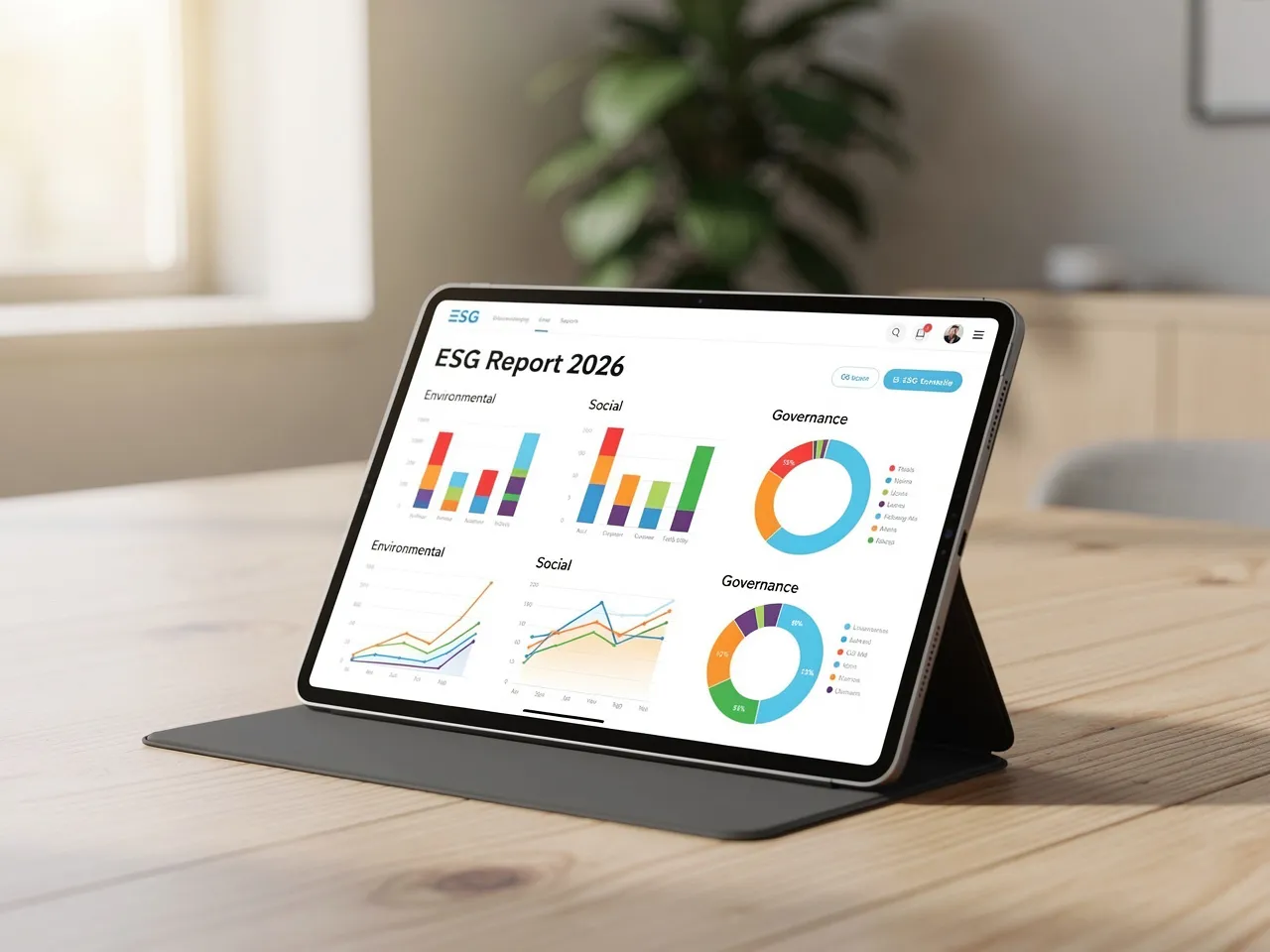

Understanding ESG Reporting Frameworks
Environmental, Social, and Governance (ESG) reporting has shifted from a voluntary gesture to a strategic business requirement, particularly across the UAE where regulators, investors, and supply chain partners increasingly expect transparent, structured disclosures. Businesses that invest in professional ESG reporting services gain a clearer picture of their operational risks, resource consumption, and social impact — information that directly shapes long-term decision-making.
Three global frameworks dominate how organisations structure and communicate their ESG data:
- GRI (Global Reporting Initiative): The most widely adopted standard worldwide, GRI provides a comprehensive set of topic-specific disclosures covering everything from energy use and water consumption to labour practices and anti-corruption policies. It suits organisations seeking broad stakeholder communication.
- SASB (Sustainability Accounting Standards Board): SASB standards are industry-specific, making them particularly useful for companies that need to speak directly to investors and financial analysts. Each sector — from oil and gas to financial services — has its own tailored set of financially material ESG metrics.
- TCFD (Task Force on Climate-related Financial Disclosures): Developed to help organisations disclose climate-related risks and opportunities in a format that financial markets can assess, TCFD is gaining rapid traction among UAE-listed companies and those with international financing arrangements.
Choosing the right framework — or a combination of them — depends on your industry, your audience, and the regulatory environment in which you operate. In the UAE, the Abu Dhabi Securities Exchange and Dubai Financial Market have both introduced ESG disclosure guidelines that draw on these international standards, meaning local businesses must understand global frameworks to remain compliant at home.
Rigorous Auditing of ESG data is an essential step that many organisations overlook during early reporting cycles. Without independent verification, even well-intentioned disclosures can contain inconsistencies that undermine stakeholder trust. Integrating an auditing process from the outset — rather than treating it as an afterthought — strengthens the credibility of every metric you publish and reduces the risk of having to restate figures in future reports.
Understanding these frameworks is the foundation of any effective ESG programme. The sections below outline how structured consulting and hands-on support can help your organisation move from framework selection to a published, verified report.
Our ESG Reporting Solutions
Navigating the full cycle of environmental, social, and governance disclosure requires more than a template — it demands structured support at every stage. Q Systems API & Sustainability Consulting FZE has delivered over 850 projects across ISO, API, and ESG disciplines since 2005, giving the team a practical understanding of what UAE-based businesses actually need to produce credible, decision-useful reports.
ESG Strategy Development
Before data collection begins, your organisation needs a clear materiality baseline. Our ESG consulting team works with leadership to identify which environmental, social, and governance topics are most relevant to your sector, your stakeholders, and the regulatory environment in the UAE. The output is a prioritised roadmap that connects ESG ambitions to measurable targets.
Data Collection and Gap Analysis
Reliable disclosure starts with reliable data. We design collection frameworks that align with GRI, SASB, and TCFD requirements, then audit existing data flows to identify gaps. Our auditing services component ensures that the figures entering your report can withstand scrutiny from investors, regulators, and rating agencies.
API Consulting Integration
For energy, oil and gas, and industrial clients, API consulting considerations often intersect with ESG performance metrics — particularly around process safety, asset integrity, and emissions management. We integrate API-aligned operational data into your broader sustainability disclosure so that technical performance is accurately reflected in stakeholder communications.
Report Preparation and Assurance
Our team drafts, structures, and reviews the final report in line with your chosen framework. We also coordinate third-party assurance through our auditing network, adding an independent layer of credibility. Alongside report delivery, we offer training and development programs so your internal teams can maintain and improve ESG data quality year on year — reducing reliance on external support over time.
- Materiality assessment aligned to your industry and UAE market context
- Quantitative and qualitative data frameworks for GRI, SASB, and TCFD
- ISO consulting linkage where management system standards support ESG objectives
- Assurance-ready documentation prepared for internal and external review
- Stakeholder communication packages derived from the final report
Whether you are producing your first sustainability disclosure or refining an established programme, our consulting approach is scoped to your current maturity level — practical, structured, and built around the realities of operating in the UAE.
The ESG Reporting Journey
Developing a credible ESG report is a structured process, not a single event. Understanding each stage helps businesses in the UAE allocate resources effectively and avoid common pitfalls that delay publication or weaken stakeholder confidence.
- Materiality Assessment: The journey begins by identifying which environmental, social, and governance topics are most significant to your business and its stakeholders. This step filters out noise and focuses effort where disclosure will carry the most weight with investors, regulators, and customers.
- Data Collection and Gap Analysis: Once material topics are confirmed, teams gather quantitative and qualitative data across operations. A gap analysis reveals where record-keeping is incomplete, which informs the scope of subsequent auditing services needed to verify figures before they appear in a public report.
- Framework Alignment: Data is then mapped against the chosen reporting standard — whether GRI, SASB, TCFD, or a combination — ensuring disclosures meet the structure and boundary requirements each framework demands.
- Draft Preparation and Internal Review: A working draft is circulated internally so subject-matter owners can validate accuracy, flag missing context, and confirm that narrative commentary aligns with the underlying numbers.
- Independent Assurance: External verification adds credibility. An independent reviewer examines data collection methods, calculation approaches, and disclosure completeness, providing a level of assurance that satisfies institutional investors and regulators increasingly active in the UAE market.
- Stakeholder Engagement: Before finalising the report, engaging key stakeholders — employees, suppliers, community representatives, and investors — surfaces perspectives that strengthen future reporting cycles and demonstrates that the process is genuinely two-way.
- Publication and Continuous Improvement: Once published, the report becomes a baseline. Tracking year-on-year performance against stated targets transforms a compliance document into a strategic management tool.
Each stage builds on the last, meaning shortcuts early in the process typically create rework later. Businesses that treat the ESG reporting journey as an ongoing programme rather than an annual task tend to produce more consistent, comparable disclosures over time.
Why Choose Q Systems API & Sustainability Consulting FZE for ESG Reporting?
Selecting the right partner for ESG consulting is one of the most consequential decisions a UAE-based business can make. The local regulatory landscape — shaped by Abu Dhabi Global Market disclosure expectations, Dubai Financial Market sustainability requirements, and the UAE Net Zero 2050 strategic initiative — demands a consulting team that understands both global frameworks and regional nuance simultaneously.
Q Systems API & Sustainability Consulting FZE has been operating as a trusted consulting partner since 2005, accumulating over 850 projects spanning ISO consulting, API consulting, ESG work, and training and development programs across the UAE and wider region. That depth of project experience means the team has encountered the practical obstacles that trip up first-time reporters: incomplete emissions data, inconsistent social metrics across business units, and governance disclosures that satisfy auditors but fail to communicate clearly to investors.
- Regional regulatory fluency: The team maps your disclosures against UAE-specific requirements before layering on GRI, SASB, or TCFD alignment, so you are not over-engineering reports for audiences that will never read them.
- Cross-discipline integration: Because the firm also delivers auditing services and ISO consulting under one roof, your ESG data can be cross-checked against existing management system records, reducing duplication of effort and improving data integrity.
- Scalable engagement models: Whether you need a full-scope ESG strategy build or targeted support for a single reporting cycle, the consulting and auditing scope is scoped to your actual stage of maturity — not a fixed package sold to every client.
- Practical training alongside delivery: Training and development programs run in parallel with project delivery, so your internal team builds the capability to maintain and improve reporting quality independently after the engagement closes.
Businesses comparing local service options should ask any prospective partner how many UAE-specific ESG projects they have completed, what their process looks like when source data is missing or unreliable, and whether their consultants have direct experience with the sector-specific materiality issues relevant to your industry. Q Systems is structured to answer all three questions with concrete project evidence rather than general credentials.
Benefits of Robust ESG Reporting
Committing to structured, transparent ESG disclosure delivers measurable advantages that extend well beyond regulatory compliance. For businesses operating in the UAE, where investor scrutiny and government sustainability mandates are intensifying, a well-constructed ESG report becomes a strategic asset rather than a box-ticking exercise.
- Stronger brand reputation: Stakeholders — from customers to supply chain partners — increasingly evaluate companies on their environmental and social conduct. Publishing credible, data-backed disclosures signals accountability and builds long-term trust.
- Improved access to capital: Institutional investors and development finance institutions apply ESG screens before committing funds. Clear, auditable disclosures reduce perceived risk and open doors to sustainability-linked financing instruments.
- Proactive risk management: Mapping governance structures, carbon exposure, and workforce practices through regular ESG analysis helps leadership identify operational vulnerabilities before they escalate into costly incidents.
- Operational efficiency gains: The data-gathering process required for ESG disclosure often surfaces energy waste, procurement inefficiencies, and workforce gaps that management can act on immediately.
- Alignment with ISO consulting frameworks: Integrating ESG metrics with existing management system standards — such as ISO 14001 for environmental management or ISO 45001 for occupational health — creates a unified performance architecture that reduces duplication of effort and strengthens audit readiness.
- Competitive differentiation: In markets where many competitors have yet to formalise their sustainability disclosures, a rigorous ESG report positions your organisation ahead of the curve when tendering for contracts or entering new markets.
These benefits compound over time. Organisations that begin with a baseline materiality assessment and build consistent annual reporting cycles find that each successive report requires less effort to produce while delivering richer insight — creating a continuous improvement loop that supports sustainable growth across every function of the business.
Integrating ESG into Your Business Strategy
Embedding environmental, social, and governance principles into daily operations requires more than a one-time report — it demands a structural shift in how leadership sets priorities, allocates resources, and measures success. For UAE businesses operating under evolving regulatory expectations and growing investor scrutiny, that shift needs to be deliberate and well-supported.
A practical starting point is mapping your existing business processes against ESG material topics. This means identifying which environmental impacts, workforce practices, and governance controls are already documented and which carry unacceptable gaps. Once gaps are visible, they can be sequenced into a realistic improvement roadmap rather than treated as an overwhelming list of obligations.
Governance integration is often the quickest win. Assigning clear ESG ownership at the board or senior management level — and linking ESG performance metrics to internal reporting cycles — creates accountability without requiring a complete organisational overhaul. Social factors, including supply chain labour standards and community engagement, benefit from written policies that are reviewed annually and communicated to relevant teams.
Strong training and development programs are essential to making ESG strategy stick at the operational level. When procurement officers, project managers, and finance teams understand why ESG data matters and how to capture it accurately, the quality of your disclosures improves substantially. Q Systems API & Sustainability Consulting FZE supports this integration through ESG consulting, ISO consulting, API consulting, and auditing services — drawing on experience across more than 850 projects in the UAE and beyond. That breadth of consulting and auditing work means the guidance your teams receive is grounded in what actually functions in regional operating environments, not generic global templates.
Finally, treat ESG integration as iterative. Set measurable short-term targets, review progress quarterly, and adjust your approach as frameworks evolve and your business grows. Sustainable strategy is built through consistent action, not a single declaration.
Case Studies in Sustainable Business Practices
Seeing how ESG principles translate into measurable outcomes helps businesses understand what a structured consulting engagement can realistically deliver. The following examples reflect the types of challenges Q Systems API & Sustainability Consulting FZE has addressed across its project portfolio in the UAE and the wider region.
Manufacturing Sector: Closing the Emissions Data Gap
A mid-sized UAE manufacturer needed to respond to investor pressure for transparent carbon reporting but had no consistent method for collecting scope 1 and scope 2 emissions data across three facilities. The engagement began with a baseline audit to map existing data flows, identify gaps, and assign ownership to operational teams. A structured data collection template aligned with GRI standards was introduced, and staff received targeted training and development programs to maintain accuracy going forward. Within one reporting cycle, the client produced its first verified emissions disclosure, giving procurement partners the evidence they required.
Energy Services Company: Governance Framework Alignment
An energy services firm operating under API standards sought to align its governance documentation with ESG investor expectations without disrupting existing API consulting workflows. The consulting team mapped current management system controls against TCFD disclosure requirements, identifying where existing documentation already satisfied governance criteria and where new policies were needed. This avoided duplication of effort and reduced the time required to prepare the company's first sustainability report by several weeks.
Professional Services Firm: Social Pillar Reporting
A regional professional services organisation wanted to quantify its social impact — covering workforce diversity, community investment, and supply chain labour standards — for inclusion in an annual ESG disclosure. The consulting process involved structured interviews with HR and procurement leads, a review of existing auditing records, and benchmarking against SASB metrics relevant to the professional services sector. The resulting report gave leadership a clear picture of where social performance was strong and where policy updates were needed before the next reporting period.
Q Systems has delivered over 850 projects in ISO, API, ESG, and training across the UAE and beyond since 2005, giving the team practical familiarity with the regulatory environment and operational realities that shape sustainable business practice in this region.
Why Choose [Your Company Name] for ESG Reporting?
This section explains Why Choose [Your Company Name] for ESG Reporting? in practical steps so a visitor can decide what to do next.
Ready when you are
Get Started with Your ESG Reporting Strategy